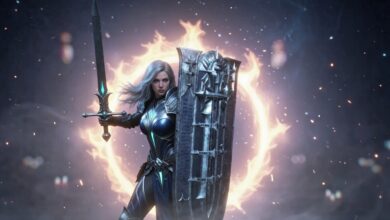
Class Identity Refinement: Dev Log – Modular Gameplay Optimization

Greetings, Aethelgardians! Welcome to another deep dive into the engine room of Project: Epoch. Following the massive data influx from Alpha Phase 3, we are ready to unveil the next major evolution of our core systems. Today’s log focuses on a critical pillar of our design philosophy: Class Identity Refinement and the optimization of modular gameplay systems.
We know that the balance between player agency and combat fluidity has been the subject of heated debate on the forums. From the action combat purists to the tactical RPG veterans, everyone wants a system that feels responsive yet weighty. In this update, we are peeling back the curtain on the skill tree overhaul, the controversial topic of ability pruning, and how iterative community testing is shaping the meta-game.
Table of Contents
- Lore Deep Dive: The Aetheric Fracture
- Modular Systems: The Skill Tree Overhaul
- Combat Mechanics: Fluidity vs. Agency
- Class Specialization & Advanced Classes
- Patch Highlights: Data & Balancing
- What’s Next?
Lore Deep Dive: The Aetheric Fracture
Before we talk numbers, let’s talk narrative. The mechanical changes coming in Patch 0.9.5 aren’t just arbitrary adjustments; they are rooted in the world’s history. The Aetheric Fracture event has destabilized the ley lines, causing magic to become more volatile. This narrative device explains why class specialization is becoming more distinct—characters must channel their energies more deliberately to avoid magical backlash.
In previous builds, a mage could dabble in Pyromancy, Cryomancy, and Void magic simultaneously with little penalty. With the Fracture, the risks are higher. This lore justification supports our move towards distinct advanced classes, forcing players to commit to a path (e.g., The Spellblade vs. The Voidwalker) rather than being a master of all trades. This aligns with our goal of class identity refinement, ensuring that when you see a Juggernaut on the battlefield, you know exactly what threat they represent.
Modular Systems: The Skill Tree Overhaul
The feedback from the player feedback loop was clear: the old talent grid was too linear. It offered the illusion of choice without real player agency. Enter the new Constellation System.
From Grids to Constellations
We have completely dismantled the old linear progression in favor of a modular, node-based system. This skill tree overhaul allows for non-linear pathing. Players can now invest in “Core Clusters” for stat scaling and “Satellite Nodes” for passive traits and utility.
This shift was necessary to support loadout management. You can now save distinct constellations for PvP, Raiding, and Solo Farming. We’ve also introduced Tactical Items—gear that functions as a bridge between nodes, allowing you to unlock synergies that would otherwise be impossible. This brings a layer of theory-crafting that was previously absent.
However, adding complexity requires trimming the fat. This brings us to ability pruning. We identified over 15 abilities across various classes that had less than a 2% usage rate in Alpha 3. These have been removed or folded into passive procs to reduce button bloat and let players focus on cooldown management of their high-impact skills.
Combat Mechanics: Fluidity vs. Agency
Achieving the perfect action combat feel is an art form. One of the biggest technical hurdles we’ve faced is optimizing input latency and server reconciliation, especially given the rise of cloud gaming. We’ve been closely studying infrastructure improvements, similar to those seen in the Amazon Luna 2026 architecture, to ensure our netcode can handle frame-perfect inputs across varying connection speeds.
The Animation Canceling Debate
Let’s address the elephant in the room: animation canceling. In Alpha 2, it was an unintended bug. In Alpha 3, players embraced it as a high-skill mechanic. After internal debate, we have decided to codify animation canceling as a supported feature for specific “Light” weapon classes (Daggers, Rapiers), while enforcing commit-frames for “Heavy” weapons (Warhammers, Greatswords).
This decision preserves the weight and impact of heavy combat while allowing the speed and combat fluidity that assassins and skirmishers expect. It enforces class identity refinement through mechanics—a rogue feels different from a warrior not just because of damage numbers, but because of how they interact with the game engine’s physics.
Class Specialization & Advanced Classes
As we push towards Beta, advanced classes are receiving their final polish. We are introducing “Mastery Passives” that unlock only when you invest 80% of your points into a specific tree. This prevents the “soup builds” we saw earlier where players would cherry-pick the best defensives from every tree.
For example, the Ranger class can now diverge into the “Beastmaster” or the “Sharpshooter”. The Beastmaster gains AI-driven companions. To ensure these companions behave intelligently, we’ve implemented a new AI behavior model inspired by the efficiency of DeepSeek’s open reasoning architectures. This ensures your pet doesn’t just stand in fire but actively flanks enemies and peels aggro.
Patch Highlights: Data & Balancing
Below is a snapshot of the gameplay balancing changes coming in the next build. These values are subject to change based on the next wave of iterative community testing.
| Class / Ability | Attribute | Old Value | New Value | Dev Note |
|---|---|---|---|---|
| Pyromancer / Fireball | Cast Time | 2.5s | 2.0s | Increased fluidity for mobile casting. |
| Guardian / Shield Wall | Cooldown | 45s | 60s | Was too oppressive in PvP point control. |
| Assassin / Shadow Step | Animation Cancel | Disabled | Enabled (Post-Hit) | Re-enabled to support high-APM playstyles. |
| Global | Stat Scaling (Dex) | 1.0 AP per point | 1.2 AP per point | Buffing Dexterity to compete with Strength scaling. |
These changes reflect our goal to shift the meta-game away from the “Tank & Spank” era into a more dynamic, movement-heavy flow.
What’s Next?
The road to launch is shortening. In the coming months, we will be focusing on the economic simulation. We want a player-driven economy that rivals real-world complexities. We’ve been looking at the projections in the Amazon 2026 Economy Report to model how agentic AI might influence automated trading bots, and we are building countermeasures to ensure fair play.
Additionally, we are revamping our Content Creator program. With the landscape of streaming evolving, as detailed in reports like YouTube in 2026, we want to ensure our game is “stream-ready” with spectator modes and Twitch integration built directly into the client.
Thank you for your continued passion, feedback, and bug reports. Your dedication makes Aethelgard better every day.