Battle Royale: The Genre That Refused to Die Quietly
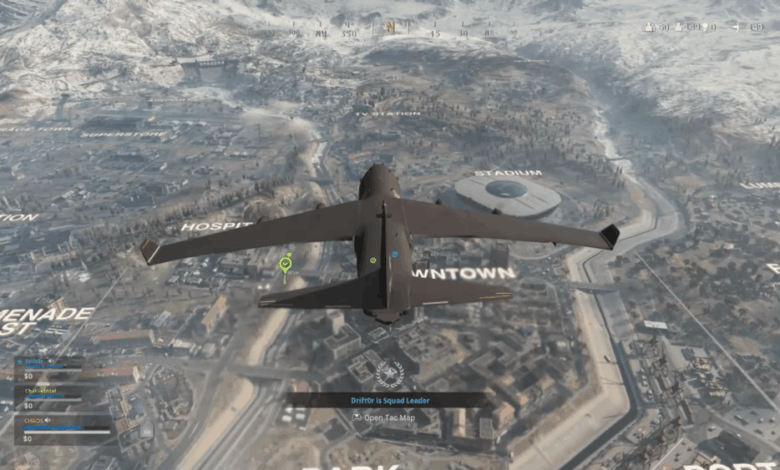
The genre isn’t just alive—it’s swallowed pieces of every other competitive style and become the skeleton everything else hangs on. The core loop is still the same: drop in, loot up, survive the shrink, last one breathing. But everything around it has grown layers.
Maps aren’t static anymore. You capture a relay station mid-match and suddenly floodlights snap on in the next circle, or turrets wake up and start sweeping. Blow a bridge and the river routing changes—whole squads get funneled into new kill zones because of decisions made ten minutes earlier. Twenty-minute matches now carry real history.
And the skill ceiling? It’s flipped. Raw aim still matters, but high-level play is dominated by players who read the game like chess at sprint speed. In Apex Legends or Warzone lobbies the real MVPs are the IGLs (in-game leaders) who spend half the match ghosting, pinging rotations, baiting third parties, and feeding perfect information. Twitch reflexes are nice. Game sense is god-tier.
Older players whose hands aren’t as fast anymore are still topping boards because macro beats micro when everyone can already aim decently. It’s less run-and-gun, more cold, calculated information warfare with bullets as punctuation.
Platforms Stopped Fighting—They Just Merged
If you time-traveled from 2020 you’d stare at a modern lobby like it was alien tech. Console vs PC flame wars? Mostly gone. Cross-play isn’t optional; it’s assumed.
Your average squad might be:
PC sweat on 360 Hz holding long angles
Console player with dialed-in aim assist owning CQC
Mobile teammate on the metro pinging rotates from a bus seat
The tech that makes this feel fair is borderline magic—AI latency prediction, dynamic input compensation, behavioral balancing so no one feels handicapped. It’s not perfect equality. It’s functional coexistence.
Matchmaking went nuclear too. Forget plain MMR. Systems now profile how you tilt: do you push harder after a knock? Choke in 1v3s? Rage-quit comms after two bad games? They pair you against opponents who mirror your exact pain points—not to punish you, but to keep you in that addictive flow zone where frustration and wins sit at a 60/40 ratio. Brutally effective psychology.
PC Still Feels Like Cheating (the Legal Kind)
Mobile and consoles are massive, but when someone wants to feel the absolute ceiling of skill expression, they boot up a PC.
480 Hz monitors, sub-1 ms polling rates, zero-deadzone mice—the input lag basically disappears. In Counter-Strike 2, Valorant, or extraction shooters like Hunt: Showdown, victory often comes down to single pixels and single frames.
Watching pros counter-strafe or flick feels like performance art. The rig stops being hardware and starts being an extension of the nervous system. For people who treat gaming like craft, it’s almost meditative: grind the same movement tech for months until it becomes unconscious. Discipline. Repetition. Mastery.
Sports Games Quietly Became the Purest Battle Arenas
EA Sports FC 26 isn’t “just football” anymore—at the top end it’s tactical warfare on grass.
Top Weekend League players read passing lanes the way a sniper reads sightlines. They bait opponents into overcommitting, then punish with ruthless pattern breaks. The physiological hit of an 85th-minute equalizer is identical to clutching a final circle: tunnel vision, spiking heart rate, the very real fear of choking under pressure.
And then there’s the transfer market in Ultimate Team. It’s basically day-trading with virtual athletes. Speculators hoard low-rated fodder for upcoming SBCs. Meta chasers watch pro tournaments to spot which random silver suddenly becomes OP. Squad builders treat chemistry like a math proof under budget constraints.
You’re not just playing matches. You’re playing the economy 24/7—checking prices at breakfast, flipping during lunch, grinding packs at night. It’s perpetual occupation of the mind.
1v1: Nowhere to Hide, No Excuses Left
Team games have the numbers, but 1v1 modes are having a quiet renaissance for a simple reason: brutal honesty.
No teammates to blame. No RNG loot. No circle luck. You lose? It’s you. Right here. Right now.
That naked truth pulls in people tired of life’s vagueness—vague performance reviews, vague relationships, vague success metrics. A clean loss in Street Fighter, Tekken, or a ranked duel gives crystal feedback: “I dropped the punish. I overextended. I read wrong.”
Players live in replays and frame data for weeks chasing that one clean win that proves the grind mattered. The skill gaps it creates are massive and visible. Ten focused hours show up immediately.
Mobile Isn’t “Secondary” Anymore—It’s the Main Stage
Western gamers still sometimes talk about mobile like it’s the kiddie table. That’s not just outdated; it’s geographically myopic.
In Jakarta, São Paulo, Manila, Mumbai, battle royale means mobile first. Flagship phones in 2026 outmuscle 2020 mid-range PCs. With claw grips, cooling fans, and haptic triggers, pros hit flicks and tracking that would make mouse players sweat.
Touch has evolved—custom sensitivity curves, gesture combos, gyro aiming. The skill expression is legitimate. Tournaments pack stadiums in Brazil and Indonesia. Prize pools compete with Western esports. Careers launch from internet cafes.
Mobile didn’t democratize gaming—it exploded it open for billions who could never afford a console or rig. The future isn’t PC-centric. It’s plural. And the numbers prove it.
Why We Keep Walking Back Into the Fire
After a day of gray ambiguity—endless emails, half-finished projects, arguments without resolution—why queue into digital war?
Because the arena gives what real life increasingly refuses: clean cause and effect.
You see enemy → you react → you win or die. Effort maps directly to outcome. Improvement is trackable. Progress is visible on the rank screen and in the stats tab.
It’s a meritocracy (mostly). No politics. Minimal invisible privilege. Just you vs the system vs other humans. And when it clicks—when you out-think, out-move, out-last— the rush feels earned in a way few real-world wins do.
Squads turn into real social circles. Life updates happen mid-rotate. Clutch moments forge bonds stronger than many offline friendships because they’re built on shared vulnerability under pressure.