Introduction
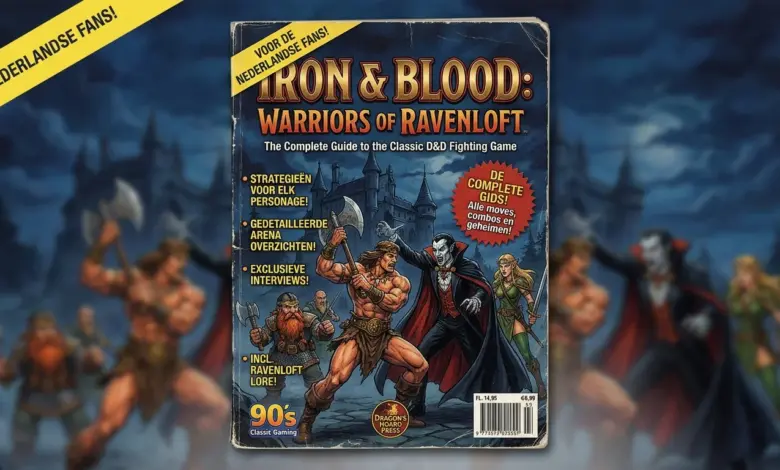
Long before the modern era of high-budget fighting games and cinematic RPGs, a unique hybrid emerged from the dark mists of the Ravenloft campaign setting. Iron & Blood: Warriors of Ravenloft is a 3D fighting game developed by Take-Two Interactive and published by Acclaim Entertainment that brought the horror-filled world of Advanced Dungeons & Dragons to the PlayStation and PC-DOS in 1996 and 1997. For Dutch gamers who grew up in the golden age of arcade fighters and tabletop role-playing, this title represents a fascinating footnote in gaming history—a game that dared to combine the strategic depth of D&D with the visceral thrill of arena combat.
This comprehensive guide explores everything you need to know about Iron & Blood: Warriors of Ravenloft: its development history, complete character roster, gameplay mechanics, critical reception, and lasting legacy. Whether you are a retro gaming enthusiast in the Netherlands, a D&D collector, or simply curious about this obscure title, this article provides the definitive resource.
Table 1: Game Overview at a Glance
Development History: From 3DO Exclusive to Multiplatform Release
The story of Iron & Blood begins not with the PlayStation, but with a cancelled console. The game was originally unveiled as an exclusive for the 3DO M2 console under the working title Ironblood. However, development plans shifted dramatically. Take-Two Interactive eventually announced that the game would first be released for the PlayStation, with versions for the M2 and PC to follow.
Creator and producer Rick Hall explained the team’s vision in a contemporary interview: “There are a lot of big guns out there and we noticed everyone’s games are martial arts-based, but there weren’t any fantasy-based fighting games. I’m a big D&D fan, so I thought that would be fun”.
The team’s commitment to authenticity extended to the animation process. The developers used motion capture technology, filming several members of the Society for Creative Anachronism—a historical reenactment group—to create realistic combat animations for the game’s diverse character roster.
The Cancelled Sega Saturn Port
A planned Sega Saturn version was officially announced but ultimately cancelled as part of Acclaim’s withdrawal of support for the Saturn platform. However, fascinating details about this lost port have emerged. Paul Good, former game designer and President of MAGFEST, revealed on an episode of Encyclopedia Bombastica that his team had rebuilt the game’s character models for the Saturn.
Good noted a specific inefficiency in the PlayStation version: the character Nym Pymplee had his mouth “modelled out [to] every single, individual tooth as a cone,” using about four hundred polygons. Good’s team rebuilt the mouth “with about ten polygons,” and their version ran at sixty frames per second—”significantly better than the PlayStation version”. This lost port remains a “what if” in gaming history.
The M2 version was officially cancelled by the end of 1996, with Take-Two and 3DO mutually agreeing to abandon the project.
Setting: The World of Ravenloft
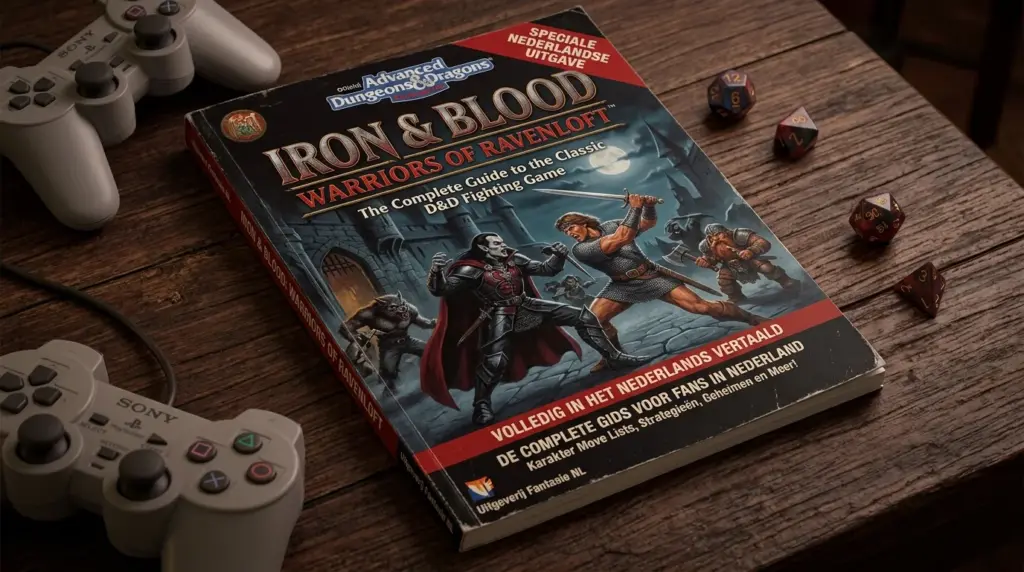
Iron & Blood draws its characters and atmosphere from the Ravenloft campaign setting for the Dungeons & Dragons fantasy role-playing game. Ravenloft is described as the darkest and most dangerous world of the Advanced Dungeons & Dragons universe—a “other-worldly dimension controlled by the most evil of evil”.
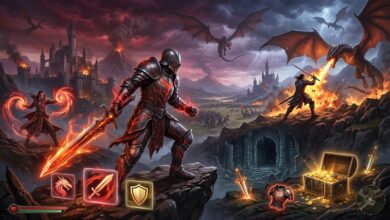
The game’s plot places players directly in the middle of a war between two powerful factions. The forces of Order are led by the ancient vampire Count Strahd von Zarovich, while the forces of Chaos are commanded by the dreaded death knight Lord Soth. Players find themselves caught in this conflict, forced to fight their way through hordes of monsters to escape the realm of Ravenloft.
This narrative framing was clever: rather than creating an original villain, the developers tapped directly into D&D’s most iconic antagonists, instantly lending the game legitimacy among tabletop fans.
Complete Character Roster
Iron & Blood features a diverse roster of 16 base characters, divided equally between Heroes (Order faction) and Villains (Chaos faction). Additionally, four boss characters can be unlocked or fought in higher difficulty modes.
Table 2: Heroes (Order Faction)
| Character | Class/Description | Weapon |
|---|---|---|
| Luthor | Paladin | Sword |
| Darius | Gladiator | Trident |
| Erland | Elven Archer | Bow |
| Torgo | Dwarf | Battle Axe |
| Ignatius Max | Halfling Thief | Dagger |
| Xenobia | Amazon | Spear |
| Red Cloud | Abber Nomad Shaman | Staff |
| Shinesta | Elven Princess | Magic |
Table 3: Villains (Chaos Faction)
| Character | Class/Description | Weapon |
|---|---|---|
| Ardrus | Skeleton Warrior | Sword |
| Balok | Black Knight | Morningstar |
| Kaurik | Warlord | Lance |
| Stellerex | Wizard | Magic |
| Sasha | Werewolf | Claws |
| Nym Pymplee | Mad Goblin | Various |
| Urgo | Margoyle (Gargoyle-like) | Claws |
| Balthazaar | Headsman | Axe |
Table 4: Boss Characters
Each character comes equipped with a unique weapon, and fights utilize a variety of attack types including fast attacks, normal attacks, strong attacks, and misc. attacks mapped to the PlayStation controller’s face buttons.
Gameplay Mechanics
Core Combat System
Iron & Blood plays like a traditional 3D fighting game of its era. Stages are enclosed by damaging Rune Walls that shock characters who get too close to the boundary—a common feature in 90s fighters to prevent ring-out camping.
The control scheme includes:
- Movement: Walking, jumping, crouching, and 3D sidestepping
- Attack Buttons: Fast Attack (X), Normal Attack (Square), Strong Attack (Triangle), Misc. Attack (Circle)
- Guard Buttons: L1 for Stand Block, L2 for Crouch Block
- Dodge Buttons: R1 for Dodge Towards, R2 for Dodge Away
Special techniques include running (double-tap forward or back), down attacks (back, forward, back + Misc.), and character-specific combos. Each fighter has three combos (high, medium, and low) and up to three special moves.
Experience and Progression System
What set Iron & Blood apart from its competitors was its RPG-inspired progression system. Players can raise their characters up to Level 9, gaining permanent improvements to their combat potential with each level. Characters gain experience points by winning matches, and after every five wins, they level up and receive slight combat buffs.
Winning matches also unlocks powerful new abilities:
- Magical Abilities: Can be used three times per match and upgraded twice
- Arcane Powers: Super moves that can be used once per match, sometimes providing persistent effects
However, there is a significant risk-reward element: if a character is defeated in Campaign Mode, their unlocked moves and experience points are permanently lost. This high-stakes mechanic was rare for fighting games of the period.
Artifacts and Equipment
The game features artifacts drawn from actual D&D campaigns, including items like the Ring of Resurrection, the Voodoo Doll, and the Signet of Holy Wrath. Other notable artifacts include:
- Ring of Teleportation: Teleports the fighter to any location
- Ring of Protection +4: Provides increased damage resistance
- Ring of Invisibility: Makes the fighter invisible
- Tempest: Summons storm clouds that strike opponents with lightning
These items could be earned by meeting specific conditions during combat, adding an extra layer of strategy and replayability.
Game Modes
Iron & Blood offers several distinct gameplay modes:
Training Mode: Allows players to learn the basics of combat and practice character moves.
Head-to-Head Mode: Standard versus fighting against another player or AI opponent. On higher difficulty settings (Fighter difficulty and above), players encounter the game’s four boss characters.
Campaign Mode: The signature mode of Iron & Blood. This team-based mode can be played cooperatively with another player or against the AI. Before each match, the computer selects an “objective” that both combatants will fight for—this could be a Magical Ability upgrade, a Ring of Resurrection, or an Additional Teammate.
Players agree on the number of lives each character gets before starting. The winner of each match claims the objective, while the losing character loses a life but can continue fighting if lives remain. This continues until one team eliminates all fighters on the opposing side.
Table 5: Game Modes Overview
| Mode | Players | Description |
|---|---|---|
| Training | 1 vs CPU | Practice mode to learn controls |
| Head-to-Head | 1 vs 1 (PvP or vs CPU) | Standard arcade fighting |
| Campaign | 2 vs 2 (co-op or vs CPU) | Team-based mode with objectives and permanent progression |
Critical Reception and Sales
Critical Response
Iron & Blood received mostly negative reviews upon release, with critics praising its ambition but condemning its execution.
Electronic Gaming Monthly’s four-man review team praised the large lineup of fighters and the innovative ability to earn new magic abilities in fights, but heavily criticized the fighting engine, citing “jerky controls and a lack of technique”.
Jeff Gerstmann of GameSpot was particularly harsh, panning the game for “jerky controls, poor animation, and camera angles which make it impossible for the player to consistently know which button to push to go in the desired direction”. The game received a 2.5/10 from GameSpot.
Next Generation critic praised the animation and graphical detail but argued that “the fighting lacks innovation… The combos are limited, the special moves are clichéd, and without any noticeable enhancements brought to the actual fighting, the action feels passé”.
GamePro remarked bluntly: “There’s no strategy (we beat the game using a single button)… Fighters get hit, then end up with their backs to an opponent; you hit a walled ring that can hurt you more than the enemy; and the moves are basic”.
The aggregate score on GameRankings stands at 46% for the PlayStation version. GameSpy later concluded that “A bargain-bin game from the day it was released, Iron & Blood is best forgotten”.
Commercial Performance
Despite the critical drubbing, Iron & Blood found a commercial audience. According to Take-Two, the game sold above 150,000 units by the end of October 1996 and accounted for 32.0% of the company’s revenue during that fiscal year. The company’s total revenue in that period was 12.5million,withnetincomeof349,074.
The game’s rights, along with other titles originally owned by Acclaim Entertainment, were acquired by Canadian production company Liquid Media Group in October 2018.
Legacy and Retrospective Value
For modern gamers and collectors in the Netherlands, Iron & Blood occupies an unusual niche. It is not a good fighting game by conventional standards, but it is a fascinating artifact of its time.
The game represents an early attempt to merge two genres that rarely intersected: the fighting game and the RPG. Its experience system, unlockable abilities, and artifact collection mechanics were genuinely innovative for 1996. Games like SoulCalibur and various anime fighters would later incorporate similar progression systems, but Iron & Blood was ahead of its time.
For D&D enthusiasts, the game offers a rare opportunity to see Ravenloft’s iconic villains—Strahd von Zarovich and Lord Soth—rendered in 3D fighting game form. The character roster, while obscure, draws from the rich well of AD&D archetypes.
Today, Iron & Blood is a collector’s item. Original PlayStation copies can be found on European retro gaming marketplaces, including Dutch sites like Marktplaats and retro game stores in cities like Amsterdam, Utrecht, and Rotterdam. The DOS version is rarer still.
How to Play Iron & Blood in the Netherlands Today
For Dutch retro gaming enthusiasts interested in experiencing Iron & Blood:
Original Hardware: PlayStation copies occasionally appear on Marktplaats, Facebook Marketplace, and at retro gaming events such as the Dutch Game Expo (NGE) and Retro Gaming Beurs in Rosmalen.
Emulation: The game can be played via PlayStation emulators on PC. The BIOS and ROM files must be obtained from original copies to comply with copyright laws.
PC-DOS Version: The DOS version requires DOSBox or similar emulation software to run on modern Windows systems.
PAL Version: The PAL PlayStation release from November 1996 is the version most readily available in the Netherlands.
Frequently Asked Questions
Q: What is Iron & Blood: Warriors of Ravenloft?
A: It is a 3D fighting game developed by Take-Two Interactive and published by Acclaim Entertainment, released for PlayStation and PC-DOS in 1996-1997. The game is set in the Ravenloft campaign setting of Dungeons & Dragons.
Q: Is Iron & Blood a good game?
A: Critically, no. The game holds a 46% aggregate score on GameRankings, with critics panning its controls, camera, and shallow combat mechanics. However, it has niche appeal for D&D enthusiasts and retro game collectors.
Q: How many characters are in Iron & Blood?
A: The base roster includes 16 characters (8 heroes, 8 villains). Four additional boss characters can be fought or unlocked via cheat codes, bringing the total to 20 playable characters.
Q: Who are the main villains in the game?
A: The final boss is Count Strahd von Zarovich, the ancient vampire lord of Ravenloft. The forces of Chaos are led by Lord Soth, a death knight. Sub-bosses include Tantalus, Magog, and Belial.
Q: Was Iron & Blood released on Sega Saturn?
A: No. A Sega Saturn version was announced and even partially developed, but it was cancelled as part of Acclaim’s withdrawal of support for the Saturn platform. A working build reportedly ran at 60 frames per second, significantly better than the PlayStation version.
Q: What makes Iron & Blood unique among fighting games?
A: Its RPG-inspired progression system. Characters gain experience points, level up to Level 9, unlock magical abilities and arcane powers, and collect artifacts—features that were innovative for a fighting game in 1996.
Q: Can I play Iron & Blood on modern consoles?
A: No. The game has not been re-released on PlayStation Network, Steam, or any modern digital storefront. It remains available only on original PlayStation and PC-DOS media or via emulation.
Q: Who owns the rights to Iron & Blood today?
A: As of October 2018, the game’s rights are owned by Liquid Media Group, a Canadian production company that acquired Acclaim Entertainment’s catalog.
Q: Was the game released in the Netherlands?
A: Yes. The PAL version of the PlayStation release was available in November 1996 across European territories, including the Netherlands.
Conclusion
Iron & Blood: Warriors of Ravenloft stands as a curious relic of the mid-1990s gaming landscape—a time when developers were experimenting with genre boundaries, 3D graphics were still finding their footing, and the fighting game market was oversaturated with martial arts titles. Take-Two Interactive’s gamble on a fantasy-based fighter with RPG mechanics was commercially successful enough to move 150,000 units, but critically, the game failed to deliver the responsive controls and strategic depth that fighting game fans demanded.
For Dutch gamers who remember renting PlayStation titles from Videoland or browsing the shelves of Game Mania in the late 1990s, Iron & Blood may evoke a sense of nostalgia—the excitement of a new game box, the disappointment of clunky controls, but also the genuine innovation of leveling up a fighter. For D&D fans, it represents a rare foray of the Ravenloft setting into interactive entertainment before the advent of modern CRPGs like Baldur’s Gate III.
Today, the game is best appreciated as a historical artifact—a flawed but fascinating experiment that tried to answer the question: what happens when you combine Dungeons & Dragons with Virtua Fighter? The answer, as history shows, is a game that is neither a great fighter nor a great RPG, but something uniquely, memorably strange.